Pest problems often feel sudden. One week, the house seems fine, and the next there are ants in the kitchen, scratching sounds in the walls, moisture in the lower level, or wood damage that no one noticed until it became serious. In reality, many pest problems build slowly. They often begin outside, long before anything shows up indoors.
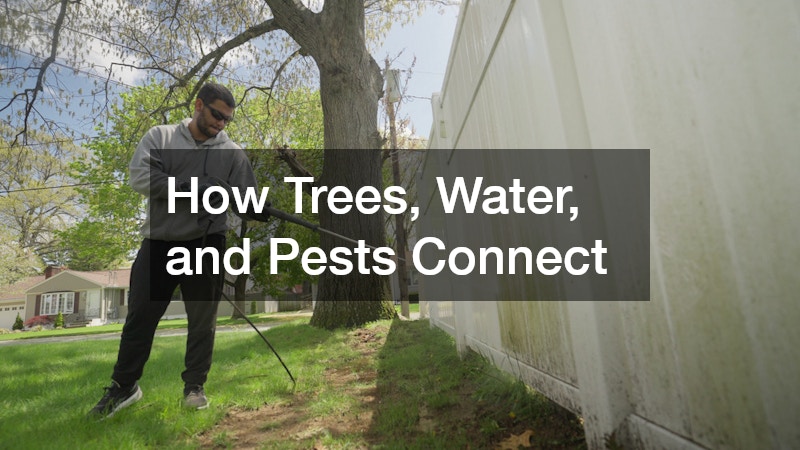
Trees, water, and pests are closely connected. A damp foundation can attract insects. Overgrown branches can give rodents a path to the roofline. Dead limbs and decaying wood can create shelter for termites, carpenter ants, and other pests. Poor drainage can turn soil around the home into a soft, protected environment where insects thrive. Once those outdoor conditions exist, pests only need a small opening to move closer to the living space.
For homeowners, the goal is not to panic over every insect or fallen branch. The goal is to recognize patterns early. When water collects, wood decays, trees become overgrown, or gaps open around the house, pests often follow. A few smart maintenance habits can reduce risk, protect the structure, and help keep small problems from becoming expensive ones.
Follow the Path From the Yard to the House
Most pests do not begin their journey in the living room. They start outside, where they find food, moisture, cover, and access. The closer those conditions are to the home, the easier it becomes for pests to move inside.
Dense shrubs, overgrown grass, leaf piles, stacked firewood, mulch against siding, and tree limbs touching the roof all create protected pathways. Pests prefer areas where they can move without exposure. Shade and moisture make those areas even more appealing. Once pests reach the foundation, siding, vents, or roofline, even small openings can become entry points.
Common outdoor conditions that invite trouble include:
- Tree limbs touching the roof or gutters
- Mulch piled directly against the foundation
- Leaves collecting in window wells
- Downspouts draining too close to the house
- Cracks around utility lines and vents
- Thick shrubs blocking airflow near siding
- Wood piles stored against exterior walls
- Standing water after storms
This is where pest control becomes part of general home maintenance. Treatments may be necessary when insects or rodents are already active, but prevention starts with reducing the conditions that attract them. A tidy, well-drained, visible exterior gives pests fewer places to hide and fewer reasons to approach the home.
Find Moisture Before It Becomes a Bigger Problem
Water is one of the biggest drivers of pest activity. Many insects and rodents are drawn to damp, protected areas because moisture supports survival. Ants, cockroaches, termites, silverfish, mosquitoes, and rodents can all become more active when water is easy to find.
Moisture problems may come from outside or inside the home. Rainwater may pool near the foundation. Gutters may overflow. Soil may slope toward the house. Basement walls may show staining or seepage. Crawl spaces may stay damp because of poor ventilation or ground moisture. Even condensation can create enough dampness to attract pests over time.
Basement waterproofing may be worth considering when moisture keeps returning despite basic fixes. A damp lower level is not only inconvenient. It can also make the home more attractive to pests and more vulnerable to wood decay, mold, and structural wear. Waterproofing may involve drainage improvements, sealing, sump systems, vapor barriers, or other methods depending on the cause of the water intrusion.
Building structural repair may be necessary when damage affects load-bearing components or the stability of the home. The important point is that pest treatment alone may not solve a moisture-driven problem. If insects are appearing because the lower level stays damp, the water source needs to be addressed. Otherwise, the same conditions will continue to invite activity.
Check for Hidden Leaks Indoors
Not every water problem comes from rain. Plumbing issues can create damp conditions in places homeowners rarely inspect. A slow leak under a sink, behind a toilet, near a water heater, or inside a wall can quietly create the kind of moisture pests love.
Small leaks are especially tricky because they may not create obvious puddles. Instead, they may soften cabinets, stain drywall, warp flooring, or keep hidden spaces damp. By the time pests appear, the water damage may already be well underway.
Areas to check regularly include:
- Under kitchen and bathroom sinks
- Around toilets and supply lines
- Behind washing machines
- Near water heaters
- Around hose bibs
- Below dishwashers
- Around basement plumbing penetrations
- In crawl spaces under bathrooms or kitchens
A local plumber can help identify and repair leaks that are not obvious during a basic visual check. This matters because pest activity may be a symptom, not the original problem. Ants near a bathroom wall, roaches under a sink, or rodents nesting near damp insulation may all point back to a water source that needs attention.
Plumbing repairs also protect the materials pests often exploit. Damp cabinets, swollen trim, softened subfloors, and wet insulation can become attractive to insects and rodents. Fixing the leak removes the moisture that supports the problem and helps prevent further damage.
For prevention, homeowners should treat unexplained dampness seriously. A small leak that runs for months can create more pest pressure than a short-lived storm.
Remove Decaying Wood Before It Attracts Activity
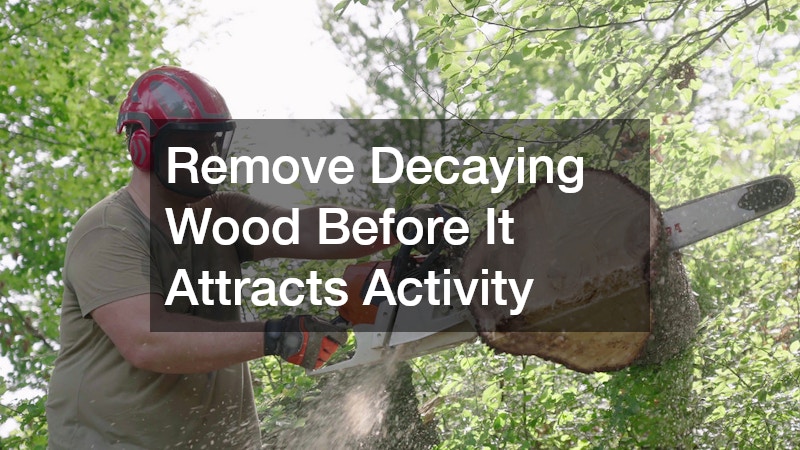
Dead and decaying wood is one of the clearest connections between trees and pests. Fallen limbs, old stumps, dead branches, rotting fence posts, stacked firewood, and decaying landscape timbers can all become shelter or food sources. When that wood sits close to the home, it can create a bridge between outdoor pests and indoor damage.
Decaying wood holds moisture. It also creates protected spaces where insects can nest and rodents can hide. Termites, carpenter ants, beetles, and other wood-related pests are often drawn to these areas. Rodents may use brush piles or fallen limbs for cover before moving toward the foundation, garage, or crawl space.
Deadwood removal is a practical step for reducing pest habitat. It also improves safety by removing weak branches that could fall during storms. Homeowners should pay special attention to dead limbs hanging over roofs, gutters, decks, and exterior walls because they can drop debris directly onto the parts of the home pests may already be using for access.
Useful habits include:
- Remove fallen limbs promptly.
- Grind or remove old stumps when practical.
- Store firewood away from the house and off the ground.
- Replace rotting landscape timbers.
- Keep decks and fences free of decayed boards.
- Avoid leaving brush piles near the foundation.
- Inspect trees after storms.
Dead wood does not have to touch the house to matter. If it creates a pest-friendly zone nearby, it can increase pressure around the property. Removing it gives pests fewer places to settle.
Watch Tree Health Closely
Trees add shade, beauty, and value to a property, but unhealthy or poorly maintained trees can contribute to pest problems. A stressed tree may attract insects. A thick canopy may keep areas damp. Branches touching the roof can give pests access to gutters, soffits, vents, and siding.
The issue is not simply that trees exist near the home. It is whether they are creating conditions that pests can use. Dense branches can trap leaves on the roof. Overhanging limbs can drop seeds and organic debris into gutters. Trees with cavities, dead limbs, or disease may harbor insects or wildlife.
Tree spraying services may be appropriate when a specific insect or disease issue is identified. However, treatment should be based on diagnosis, not guesswork. Spraying the wrong problem wastes money and may not reduce pest pressure around the home. In some cases, pruning, soil improvement, or removal of diseased material may be more useful than treatment alone.
Healthy trees are less likely to create pest trouble. They shed fewer dead limbs, recover better from stress, and are less likely to become long-term habitats for damaging insects.
Keep Growth Away From the Structure
Routine yard care is one of the simplest ways to reduce pest access. Branches, vines, shrubs, and groundcover can all give pests a path toward the home when they are allowed to touch or crowd the structure.
Tree services can help with trimming branches away from the roofline, removing storm-damaged limbs, thinning dense canopies, and keeping trees from interfering with gutters, siding, utility lines, and drainage paths. This type of work is not only about appearance. It can reduce access points and improve airflow around the home.
Good airflow matters. When plants crowd the home, siding and soil may stay damp longer after rain. That moisture can draw pests closer. A cleaner perimeter makes it easier to spot cracks, droppings, damaged vents, mud tubes, or other warning signs before activity spreads.
Take Wood-Destroying Insects Seriously
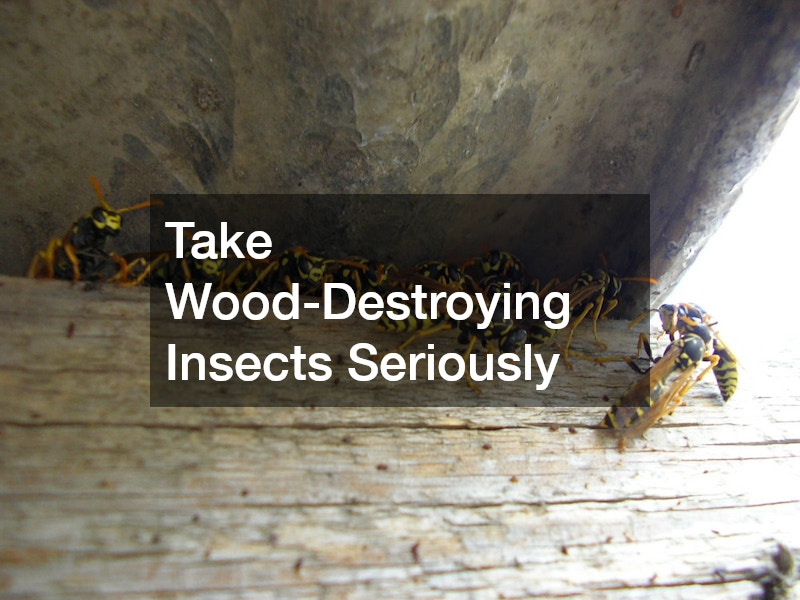
Some pests are more than a nuisance. Termites can damage hidden wood long before signs become obvious. They are strongly connected to moisture, soil contact, and accessible wood. When trees, water, and structural materials overlap, termite risk can rise.
Termite inspection specialists can evaluate warning signs and determine whether activity is present. This is important because termite damage is often hidden inside walls, flooring, sill plates, and other areas homeowners cannot easily see. Guessing can lead to delayed treatment or unnecessary work.
Warning signs may include mud tubes, discarded wings, bubbling paint, hollow-sounding wood, damaged trim, or small piles of debris near wood surfaces. However, the absence of visible signs does not always mean there is no activity.
Moisture control is a major part of prevention. Keeping water away from the foundation, repairing leaks, removing decaying wood, and correcting wood-to-soil contact can help reduce conditions termites favor. Treatment may be necessary when activity exists, but prevention depends on making the property less inviting in the first place.
Stop Rodents Before They Settle In
Rodents are opportunistic. They use cover, warmth, food, and small openings to move from outside to inside. Trees and shrubs can provide cover. Fallen branches and clutter can create nesting areas. Rooflines and utility openings can become access points. Once rodents enter, they can damage insulation, wiring, stored items, and food supplies.
Rodent pest removal services may be needed when activity is already present. Effective removal usually includes more than trapping. It often involves locating entry points, sealing access, cleaning contaminated areas, and reducing outdoor conditions that allowed rodents to approach in the first place.
Homeowners should inspect both low and high entry points. Rodents may enter through foundation gaps, crawl space vents, garage door seals, roof returns, soffit openings, utility penetrations, and areas where branches bring them close to the roof.
Prevention depends on removing cover and access. Trim vegetation, move stored items away from walls, seal openings, repair damaged vents, and keep food sources contained. If rodents are removed but entry points remain, the problem can return quickly.
Get Help When Water Keeps Coming Back
Some water problems cannot be solved with a splash block or a quick gutter cleaning. If water repeatedly enters the basement, pools near the foundation, or keeps crawl spaces damp, the property may need a more complete drainage evaluation.
A waterproofing contractor can assess recurring moisture and recommend solutions based on the source of the problem. This may involve foundation crack repair, sump pump improvements, drainage systems, vapor barriers, grading changes, or exterior water management. The exact solution depends on how water is reaching the home.
Warning signs that basic fixes may not be enough include:
- Water stains that return after storms
- Cracks with seepage
- Standing water near foundation walls
- Damp crawl space insulation
- Sump pump failure or frequent cycling
- Musty odors that persist
- Wet basement corners
- Soil that slopes toward the house
Persistent water intrusion does more than create damp air. It can support insects, damage wood, weaken materials, and create conditions that rodents and other pests may exploit. A dry home is generally less appealing to pests and easier to maintain.
Recognize When Damage Goes Deeper

Moisture and pests can eventually create damage that goes beyond basic maintenance. Termites, carpenter ants, rodents, rot, and long-term water intrusion can affect framing, beams, floor joists, sill plates, subfloors, and foundation-adjacent materials. When structural materials are weakened, treating pests or drying the area is only part of the solution.
When damage is structural, guessing is risky. Qualified evaluation can determine whether repairs are cosmetic, localized, or more serious. The best outcome comes from addressing the full chain: water source, pest activity, damaged material, and future prevention.
Trees, water, and pests are rarely separate issues. They influence one another in ways that can affect the entire home. A tree with dead limbs may drop debris into gutters. Clogged gutters may send water toward the foundation. Moisture near the foundation may attract insects. Those insects may damage wood or draw attention to hidden decay. Rodents may use overgrown landscaping for cover before finding a gap into the house.
The healthiest homes are maintained as complete systems. The yard, trees, drainage, foundation, and interior spaces all matter. By paying attention to how they work together, homeowners can reduce pest pressure, protect the structure, and avoid many of the hidden problems that become costly only after they have been ignored for too long.